
Why source tuna from Ecuador: the case for the world's tuna hub
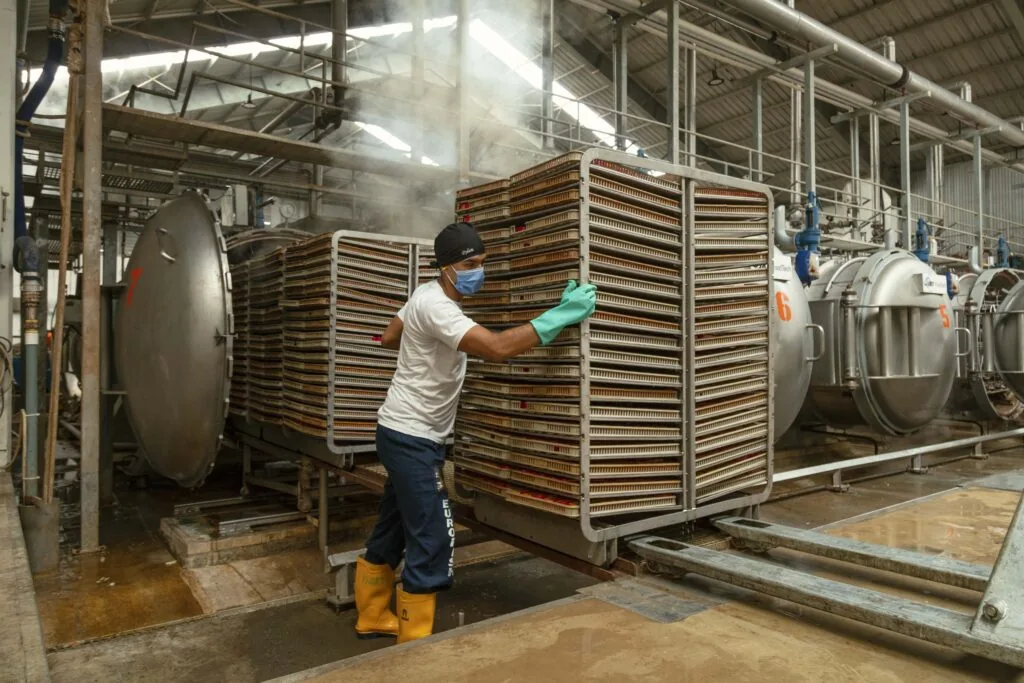
Ecuador is one of the world's largest tuna processors and the largest in the Americas, with Manta — self-styled "tuna capital of the world" — at its centre. For an importer comparing origins, the advantages are structural, not promotional. Here is what actually drives them.
The fishing grounds are next door
The Eastern Pacific Ocean off Ecuador holds some of the most productive skipjack and yellowfin grounds on the planet, managed under the IATTC regional framework. Short steaming distances mean fresher raw material at the plant: fish caught this week is cooked this week, which shows up directly in histamine control and final quality.
An industrial cluster, not isolated factories
Manta concentrates fleets, shipyards, cold stores, can makers, carton suppliers, laboratories and freight forwarders in one port city. That cluster effect means redundancy and speed: spare reefer capacity exists, lab results come back same-day, and a vessel breakdown doesn't strand your programme. Eurofish's 59,129 m² plant and 11,000 MT of cold storage sit inside this ecosystem, minutes from the loading port.
Trade access in the right markets
- European Union: Ecuador's trade agreement gives prepared tuna preferential access with EUR.1/REX origin documentation.
- South Korea: the Ecuador–Korea agreement is phasing down tariffs on tuna products.
- China: Ecuadorian plants register with GACC under Decrees 248/249; Ecuador's seafood trade with China has grown rapidly.
- Latin America: regional agreements keep intra-American trade competitive — relevant for buyers consolidating in Colombia, Chile or Mexico.
A workforce that has done this for generations
Tuna cleaning is skilled manual work, and yield differences between an experienced and an inexperienced cleaning line translate directly into your cost per finished tonne. Manabí's workforce has processed tuna since the 1950s; that accumulated skill is hard to replicate in new origins.
Sustainability credentials that are verifiable
The Ecuadorian industry runs TUNACONS, a fishery improvement project with WWF working toward the MSC standard for the purse-seine fleet — alongside standard Dolphin Safe monitoring and increasingly common BRCGS/IFS plant certification. For retail programmes that must document sourcing policy, Ecuador's paperwork is mature.
Where Ecuador is not the answer
Honest scoping helps both sides: ultra-low-cost canned segments dominated by Asian processors with different labour economics, and species Ecuador doesn't land at scale (Atlantic bluefin, for instance), are better served elsewhere. For skipjack and yellowfin in cans, pouches, loins and ULT sashimi formats, the Ecuadorian value case is strong.
Frequently asked questions
Which species does Ecuador land at scale?
Skipjack (Katsuwonus pelamis) and yellowfin (Thunnus albacares) dominate the purse-seine catch, with bigeye available through longline fleets — the basis for canned, pouched, loin and sashimi formats.
Is Ecuadorian tuna accepted in the EU?
Yes — Ecuador is a major supplier of prepared tuna to the EU under preferential origin rules, and exporting plants operate under EU-approved sanitary supervision.
How do Ecuadorian lead times compare with Asia?
To the Americas and Europe, Ecuador is typically faster (2–4 weeks ocean transit versus 4–6 from Southeast Asia); to Asian destinations transit is longer, which matters mainly for spot business rather than programmes.
Further reading
Compare your current origin against Ecuador
Send your specification and volumes — we return a like-for-like landed-cost and certification comparison.